When a route releases late, prove where the time actually went.
Everyone blames the courier. Often the delay happened earlier — an order past cut-off, a script awaiting pharmacist approval, production waiting on a backorder. Without a shared record, the same argument repeats every week.
TimeKeeper is Ship Steward’s pharmacy-operations reporting service — it logs actual-vs-goal times across the full release chain, with a reason-for-delay captured at every handoff, producing an honest site-level scorecard of where the clock gets lost before it ever becomes a courier conversation.
Why does the same late-release argument repeat every week?
Because no one has a shared, stage-by-stage record of where the time was actually spent.
The Courier Gets Blamed
The last leg is visible, so it takes the blame — even when the delay started three stages earlier.
No Root Cause
Was it intake, approval, production, or release? Without data, it’s a guess every time.
No Actual-vs-Goal
Stages have no target times, so “late” is a feeling, not a measured variance.
The Loop Never Closes
Same conversation, same finger-pointing, no record to break the cycle.
What does TimeKeeper track?
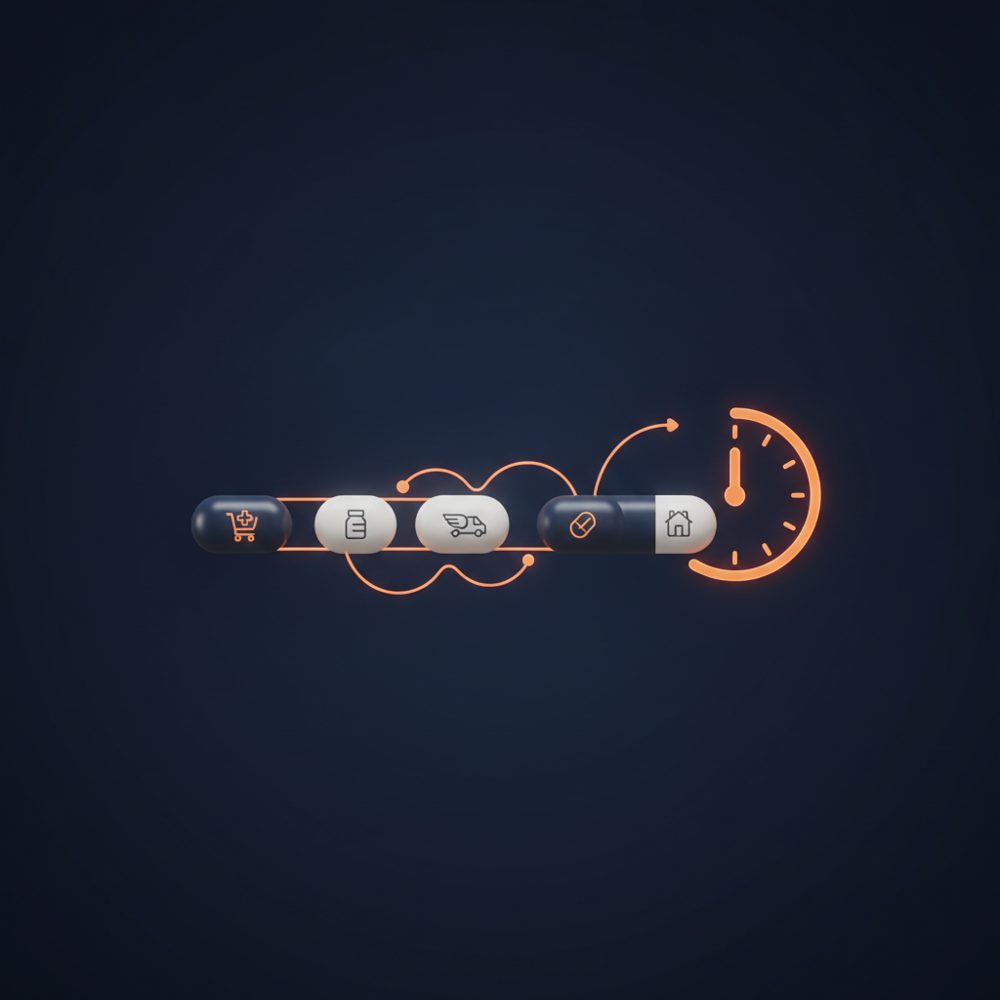
Four stages, with actual-vs-goal time and a reason-for-delay code at every handoff.
Order Entry
Orders received and entered vs cut-off. Reasons: late intake, missing refill authorization.
Pharmacist Approval
Clinical review and DUR time. Reasons: RPh unavailable, DUR hold.
Production
Fill, verify, package, stage. Reasons: backorder, tech capacity.
Courier Release
Handoff to the courier for dispatch. Reasons: late pickup, staging delay.
An honest scorecard of where the clock gets lost
A weekly pharmacy-operations report — per route, per production date, per pharmacy.
TimeKeeper reports actuals captured at each stage; it adds a labor and throughput lever beyond delivery and makes late-release conversations about the real cause, not the last leg.
Questions buyers ask
Isn’t a late release always the courier’s fault?
Often it isn’t. The delay frequently starts upstream — an order past cut-off, a script awaiting pharmacist approval, or production waiting on a backorder. TimeKeeper shows which stage actually lost the time.
What exactly does TimeKeeper measure?
Actual time in versus goal time out for each of four stages — order entry, pharmacist approval, production, and courier release — with a structured reason-for-delay code at every handoff, rolled up per route, per production date, and per pharmacy.
How does this connect to delivery and courier costs?
It ties order-release timing to delivery windows, so you can see when late couriers are actually downstream of late releases. That makes courier performance conversations fair and adds a labor and throughput lever beyond delivery itself.
Stop guessing where late releases come from.
See TimeKeeper score a site’s release chain — order entry to courier handoff — so the weekly conversation is about the real cause.
Request a Demo